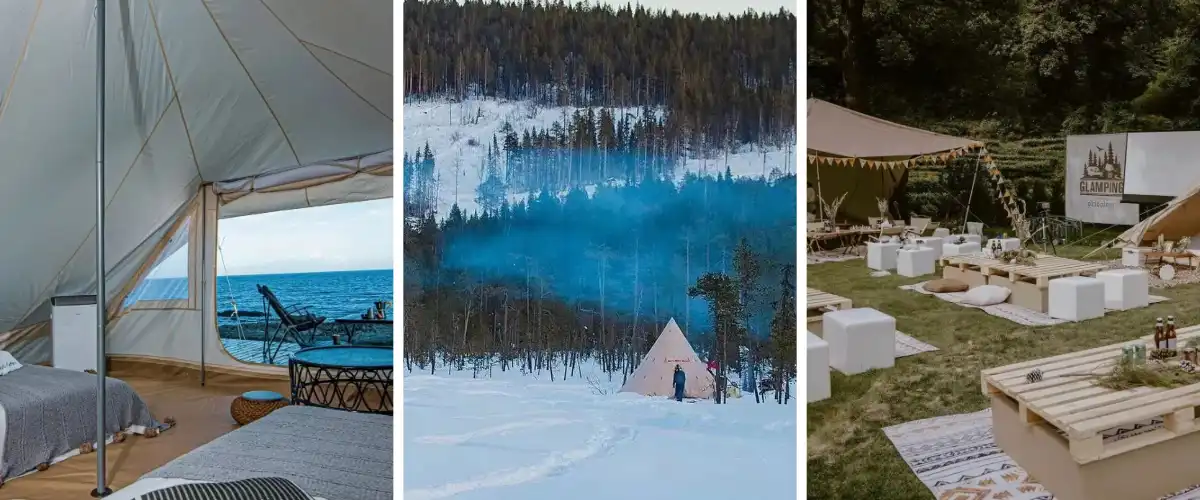
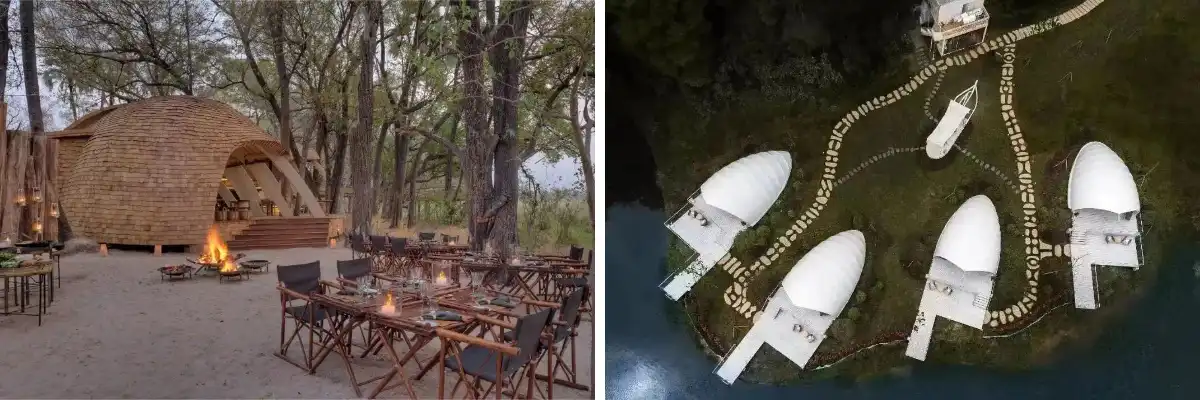
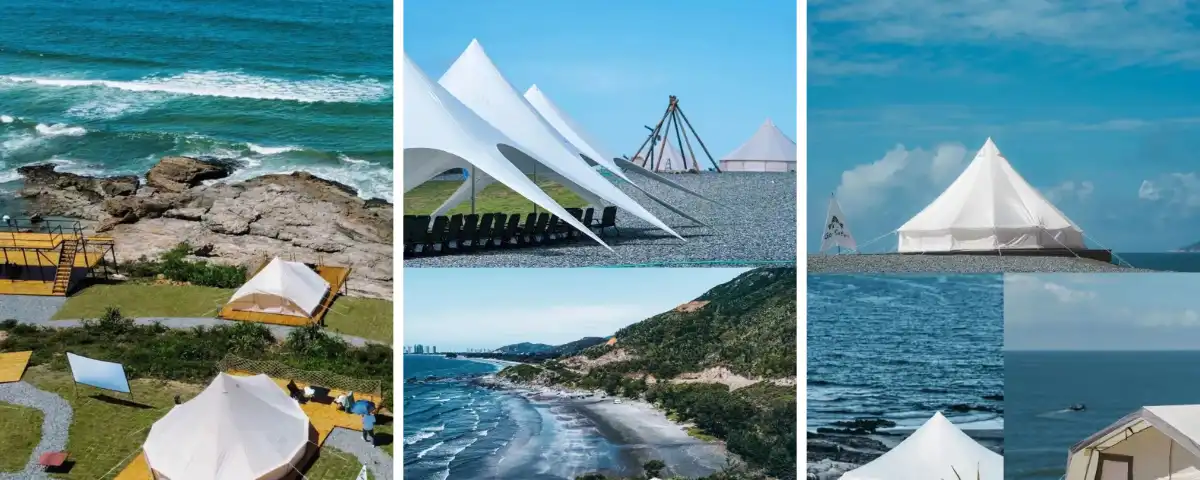
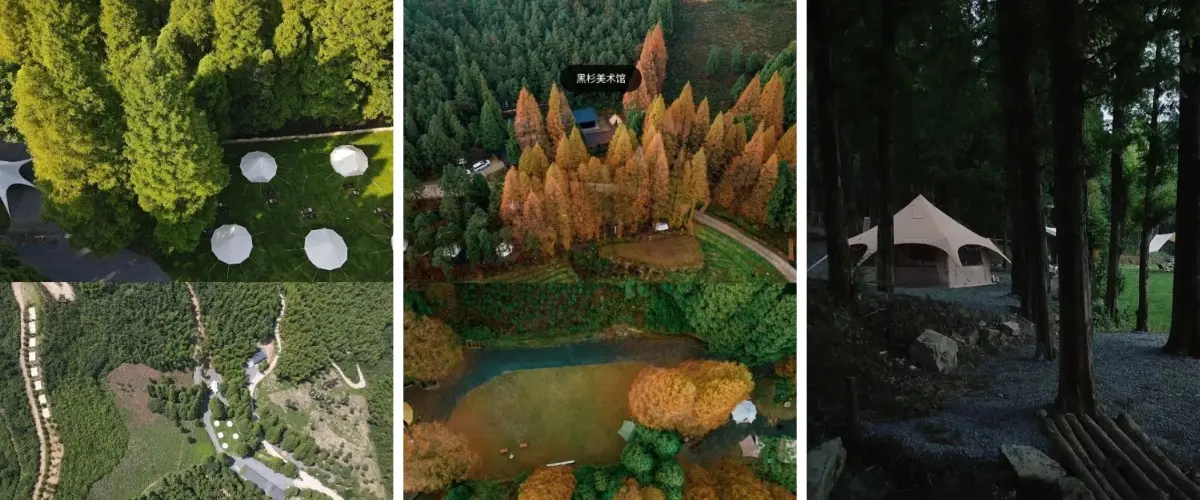
Recently, newly developed campsites have become a common sight near popular scenic areas. On slightly flat terrain, a campsite can be found every kilometer or two. With the gradual easing of policies, as well as urban dwellers' growing desire for leisure and recreation and the need to rebuild social connections, the campsite market has entered a significant growth phase. Whether it’s glamping in urban areas or refined camping in the outdoors, proper planning in advance is essential. During operation, creating differentiated features, developing compelling product content, and hosting thematic IP activities are key to seizing opportunities and leading the market.

As an emerging tourism format, camping aligns with the current emphasis on developing leisure and vacation tourism. In the foreseeable future, the campsite industry will become a new driver of consumption, perfectly evolving from a lifestyle trend into a thriving industry. Simultaneously, campsites are transitioning from single-function spaces to compound tourism and vacation destinations, developing into charming, internet-era campsites that cultivate their own unique appeal.

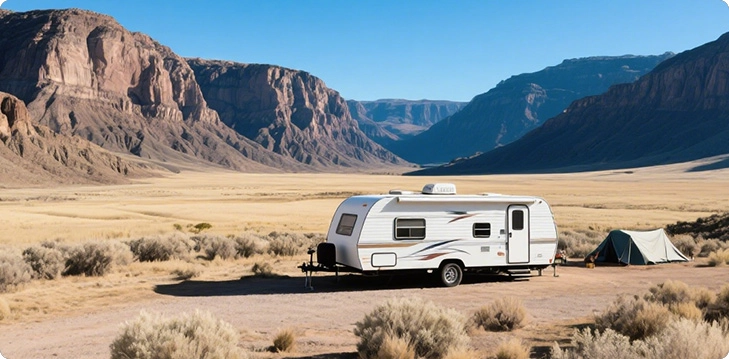
Campsites can be categorized based on their terrain into several types: beachside, lakeside, forest, rural, mountain, riverside, and desert campsites. Regardless of the type, landscape design is undeniably crucial. Designers must comprehensively manage the overall campsite layout, thoroughly understand site conditions, and fully utilize landscape elements to create campsites that are tailored to the local environment.
Principles of Campsite Planning and Design
Each campsite’s natural conditions and surrounding terrain vary significantly, and the recreational activities developed are equally diverse. In general, campsite planning should adhere to the following principles:
Functional Principle: Campsites must cater to different types of campers (RV users, private car users, and those without vehicles) by providing services that meet their specific needs. Supporting facilities such as gas stations, auto repair shops, and car washes are also essential to ensure vehicles operate smoothly.
Ecological Principle: Campsites are typically built in scenic areas with rich natural resources, leveraging these attractions to draw visitors. A key consideration in campsite development is how to minimize disruption to the original ecosystem from an ecological perspective, ensuring that any added artificial landscapes blend harmoniously with the natural surroundings without compromising the original natural landscape.
Harmony Principle: The various functional zones of a campsite should be logically connected, complement each other, and develop harmoniously and cohesively, forming a unified yet distinctive organic whole. What attracts visitors to a campsite is not only the facilities but also the surrounding natural environment. Therefore, campsite construction must harmonize with the natural setting.

Design Elements of Campsites
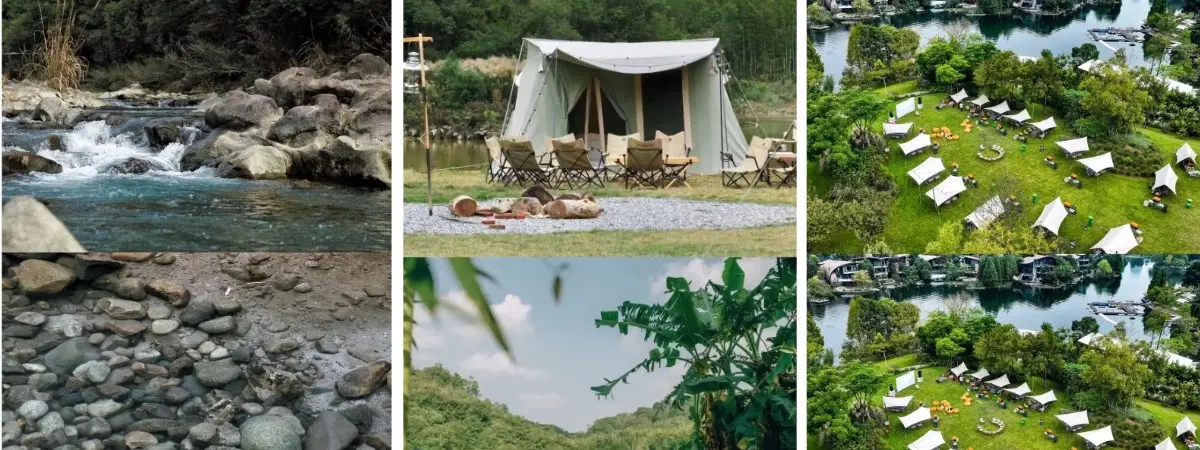
1. Water: In campsite planning and design, water is an indispensable element. This is especially true for beachside, riverside, and lakeside campsites, where the choice of water bodies is paramount. Serene lakesides, hot springs, or open-air hot springs in beautiful settings are major selling points for campsites. Activities such as water sliding and water play in entertainment areas also rely heavily on water features.
2. Plants: For plant configuration in campsites, deciduous trees should be planted to allow visitors to enjoy the changing seasons. Shrubs and deciduous forests better reflect the natural landscape of blooming and withering compared to evergreen trees like pines and cypresses. Trees that produce resin or attract mosquitoes should be avoided. Tall trees are generally more effective than shorter ones.
3. Structures: Most self-driving tourists come to campsites seeking the tranquility of nature, so excessive reinforced concrete structures should be avoided. To meet diverse visitor needs, cabins, homestays, prefabricated buildings, and eco-friendly tourist restrooms can still be constructed. All structures should be designed with natural ventilation and lighting in mind. Their colors and forms should harmonize with the local natural and cultural environment, adhering to traditional architectural customs.

4. Landscape Structures: These include steps, slopes, walls, fences, and public rest facilities. To maintain a natural and rustic appeal in RV campsites, materials like stone and wood can be used for fences and steps. Materials for enclosing and separating spaces should also reflect local characteristics.
5. Paving: Paving should be minimized in campsite construction. While main roads may be asphalt-paved, secondary roads and auxiliary paths should be gravel-paved. Besides the main drainage systems requiring drainage pipelines), other drainage ditches should have cobblestone bases to facilitate water infiltration. Tent sites should use local soil and be sown with native grass seeds. Parking areas and driveways can be covered with local small pebbles, with native grass seeds sown in the gaps using local soil.

Campsite Project Case Studies
1. Go Safari·HeipaiJiao Glamping Camp
Location: Huizhou City, Guangdong Province
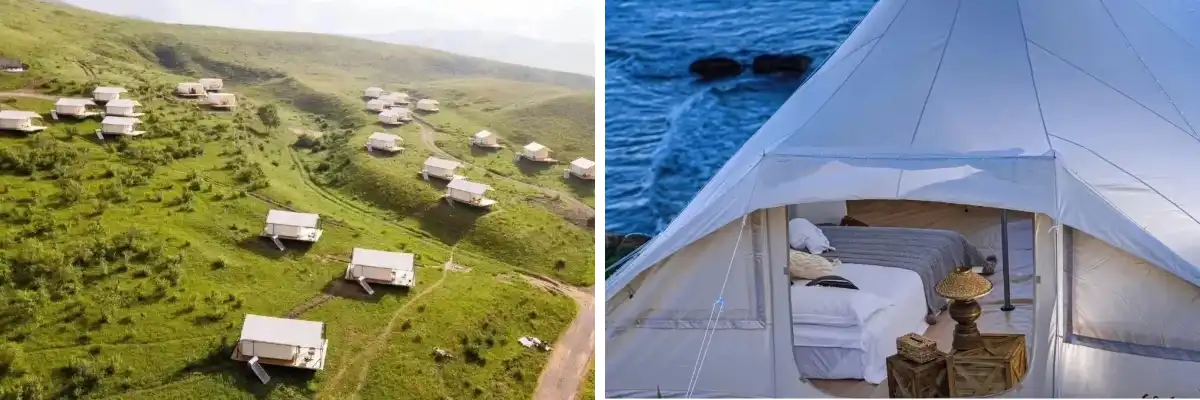
The camp is built along a cliff facing the mountains, with each tent featuring a private unobstructed ocean-view terrace. Sitting on the terrace listening to the waves is an experience one could enjoy all day.

2. Xixin Glamping Camp
Location: Moganshan, Huzhou City
Nestled between Tianshan and Dalang peaks, at the highest altitude of Moganshan, temperatures here are 3–5°C lower than at the foot of the mountain. It is a natural oxygen bar and air-conditioned retreat, making it an ideal escape from the heat. Sunlight filters through dense forests, dappling the tents, while mountain breezes carrying the fresh scent of trees evoke a Nordic ambiance. Nights are spent falling asleep to the rustling of leaves, and mornings begin with the chirping of birds.

3. Krug Glamping Camp
Location: Bole, Xinjiang
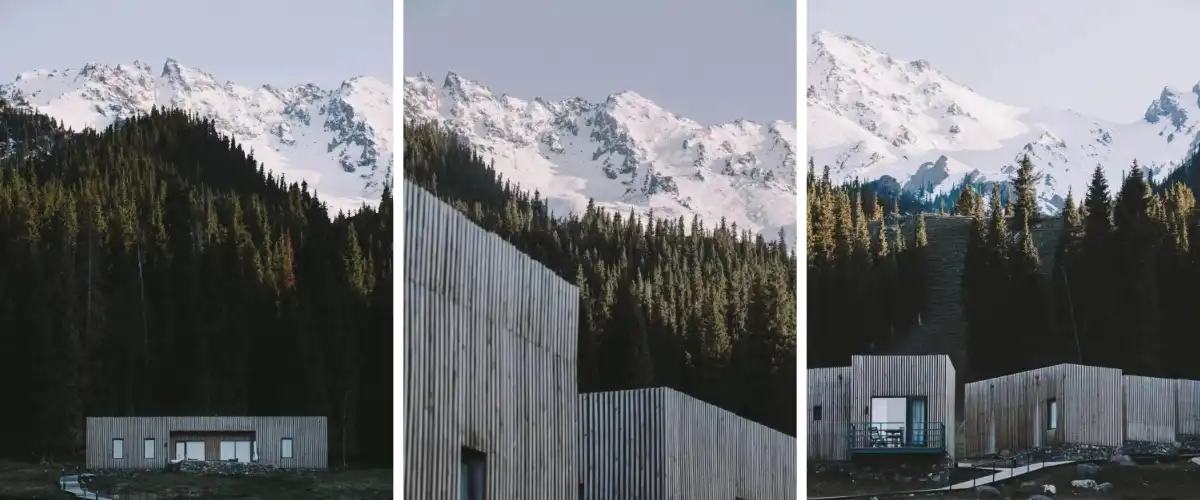
Situated in Biezhantao Mountain, Wenquan County, Xinjiang, at an altitude of 2,000 meters, the camp enjoys cool summers and mild winters. Within a 30-kilometer radius are attractions like Sayram Lake, glaciers, snow-capped mountains, hot springs, grasslands, valleys, and primeval forests.
The camp features only 15 villa-style wooden cabins, nestled along the pine-covered mountain slopes. Each room has a large terrace and floor-to-ceiling windows, offering stunning views upon opening the curtains. At Krug Camp, the gentle flow of streams and the chirping of forest birds serve as a natural wake-up call. Waking up to mist-shrouded mountains outside the windows is a daily delight.

4. Amangiri’s Sarika Camp
Location: Utah, USA
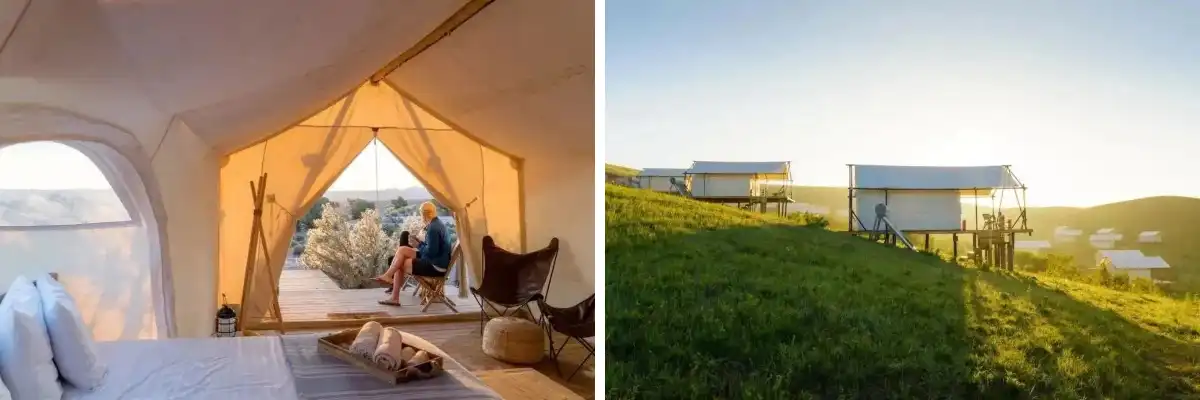
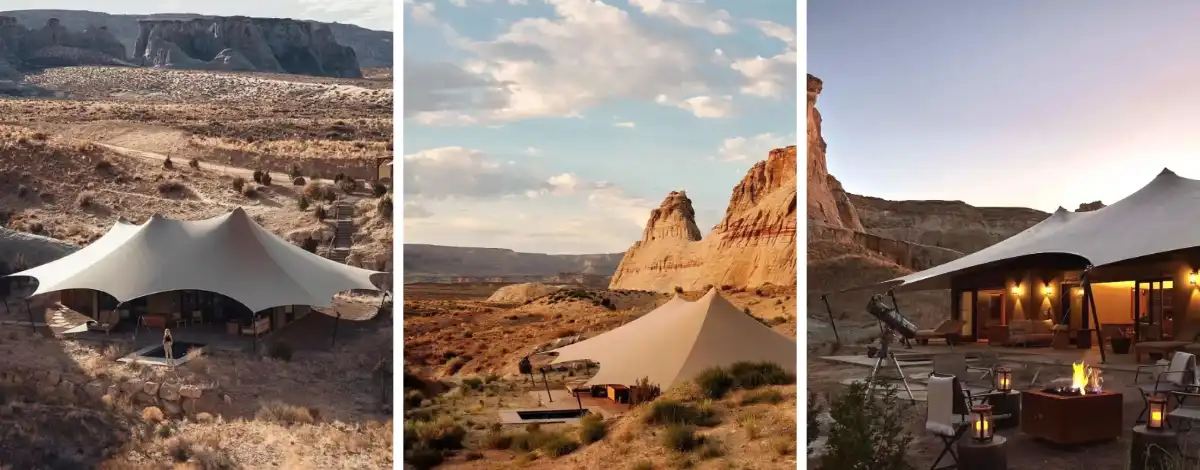
Aman’s first glamping tent camp expands the wilderness experience through tented accommodations, offering the ultimate in secluded luxury. Between Amangiri and the camp lies a breathtaking landscape of rugged mesas, narrow canyons, and rust-colored sand dunes.
Camp Sarika’s comfortable, back-to-nature atmosphere is perfect for outdoor enthusiasts. Each campsite has a private fire pit, ideal for gathering at dusk, sitting around the bonfire, and stargazing through telescopes at night.